
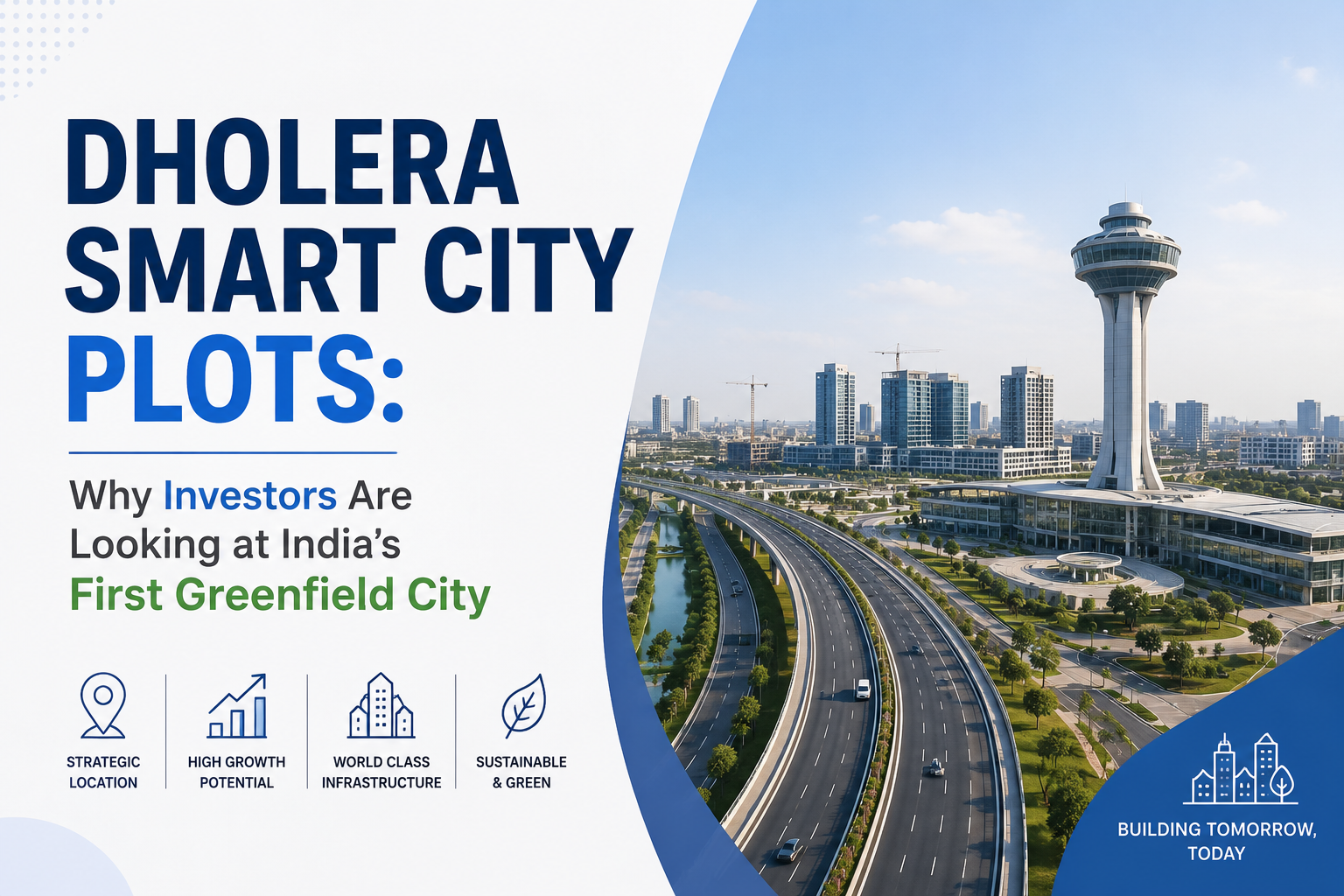

How the Dholera SIR is Transforming Gujarat’s Economy

Gujarat has always been known as a business-friendly state. From textiles to pharmaceuticals, this western state has built a strong reputation for industrial growth and entrepreneurship. But something bigger is happening right now—something that could reshape not just Gujarat, but India’s entire economic landscape. I still remember the first time someone mentioned Dholera to me. Honestly? I had no clue what they were talking about. Another real estate project, I thought. But boy, was I wrong. Fast forward to today, and Dholera SIR has become one of the most talked-about development projects in India. Not just among real estate folks, but economists, urban planners, and everyday investors are paying attention too. So what’s the big deal? Why should you care? Let me walk you through everything—no jargon, no fluff. Just straight talk about what’s happening in Dholera and why it matters for Gujarat’s future. Dholera SIR: More Than Just Another Project Okay, first things first. What even is Dholera SIR? SIR stands for Special Investment Region. Fancy name, right? But here’s the simple version—it’s basically a massive planned city being built from the ground up. We’re talking about 920 square kilometers of land. That’s roughly twice the size of Mumbai! Located about 100 km from Ahmedabad, this isn’t your typical real estate venture. The government—both state and central—has serious skin in the game here. It falls under the Delhi-Mumbai Industrial Corridor, which is one of India’s most ambitious infrastructure projects ever. Think about it this way. Most Indian cities grew organically over decades or centuries. Roads came later. Drainage was an afterthought. Power supply? Well, we all know how that goes during summer. Dholera flips that script entirely. Everything here is being planned before construction begins. Roads, electricity, water systems, internet connectivity—all designed together. It’s like building a house with proper blueprints instead of adding rooms randomly whenever you feel like it. The Infrastructure Story: This Is Where It Gets Exciting You know what makes or breaks a city? Infrastructure. Plain and simple. And Dholera is getting some seriously impressive stuff. Getting There Will Be Easy Right now, reaching Dholera takes some effort. But that’s changing fast. The Ahmedabad-Dholera Expressway is almost ready. Once complete, you’ll reach Dholera from Ahmedabad in about 45 minutes. That’s quicker than my daily commute in Bangalore traffic, honestly. Then there’s the Dholera International Airport. Yes, an actual international airport! It’s under construction as we speak. When finished, it’ll handle both passengers and cargo. Imagine the trade possibilities that opens up. Metro connectivity is also on the cards. And a dedicated freight corridor will help factories move their products efficiently across the country. Smart City Features Here’s what I find really cool about Dholera’s planning. All utility lines—cables, water pipes, everything—will run underground through dedicated ducts. No more digging up roads every few months for repairs. No tangled mess of wires hanging everywhere. The city will have 24/7 water supply. Reliable power. Proper waste management systems. Even renewable energy integration. These might sound like basic things. But let’s be honest—how many Indian cities actually deliver on these promises? Dholera has a real shot because it’s starting fresh. Industries Are Coming (And Bringing Jobs With Them) Infrastructure alone doesn’t transform an economy. You need businesses. You need factories. You need jobs. And that’s exactly what Dholera is attracting. What Kind of Industries? The region has dedicated zones for different sectors: Electronics and semiconductors (huge demand globally right now) Automobile manufacturing and spare parts Pharma and healthcare products Defense equipment Solar panels and renewable energy gear Several big companies have already announced plans to set up shop here. The state government is sweetening the deal with tax benefits, faster approvals, and subsidized land rates. Here’s the part that excites me most. Where there are factories, there are jobs. Engineers, technicians, managers, supervisors, security staff, canteen workers—the list goes on. Experts estimate Dholera could create lakhs of employment opportunities over the next decade. And where there are jobs, people move in. They need houses. They need schools for their kids. Hospitals. Shopping centers. Restaurants. See how it all connects? One thing leads to another, creating an entire ecosystem. Real Estate: Why Investors Are Paying Attention Alright, let’s talk about what many of you are probably curious about—property investment. Land Values Are Moving Up This is basic economics, really. When infrastructure improves and industries arrive, land prices rise. That’s just how it works. People who bought plots in dholera sir a few years back have already seen decent appreciation. And the real growth hasn’t even started yet. Once the airport opens and more factories become operational, expect another jump. Still Affordable (For Now) Here’s the thing about Dholera that makes it different from investing in, say, Mumbai or Bangalore. Prices are still reasonable. A middle-class family can genuinely afford to buy land here. You don’t need crores to get started. Many families are looking into dholera sir plot booking right now, hoping to get in before prices climb further. I can’t predict the future, obviously. But the logic makes sense—buy early, benefit later. Growing Demand Ahead As workers relocate for jobs, they’ll need places to live. Residential demand will grow. Commercial spaces—shops, offices, restaurants—will become valuable too. If you’re exploring plots in dholera sir, do your homework. Check the location carefully. Verify all documents. And please, work with someone trustworthy. What Does the Future Look Like? Let me be real with you. Dholera isn’t finished. It’s a work in progress. Anyone telling you it’s a guaranteed overnight success is probably trying to sell you something. But here’s why I’m optimistic. Next 2-3 Years The airport should become operational. More expressway sections will open. Industrial units will start production. You’ll see real activity on the ground—not just plans on paper. 5-7 Years Down the Line Population will grow significantly. Schools and hospitals will come up. Residential areas will fill up. Property values? Likely much higher than today. 10+ Years If things go according to plan, Dholera could become a self-sustaining city. A genuine alternative
Plots for Sale in Alwar – Buy Residential Lands (A Practical Buyer’s Guide)

Buying a plot is a big decision—sometimes bigger than buying a flat—because you’re not just choosing a “home,” you’re choosing a location that will shape your daily life for years. If you’re exploring Plots for sale in Alwar, you’re already looking in a region that many families and investors consider a smart balance of affordability, connectivity, and long-term potential. At BHADANI REALTOR, we meet many buyers who ask the same questions: “Which area is right for my budget?” “How do I avoid legal issues?” “Is it better to buy inside the city or on the outskirts?” This blog answers those questions in a simple, clear way—so you can move forward confidently. 1) Why Alwar Is on Every Smart Buyer’s Shortlist Alwar has a unique advantage: it feels calmer and more livable than crowded metros, yet it still stays connected to major job and business zones in North India. That’s a big reason why interest in residential land has been steadily growing. A location that works for both living and investing People choose Alwar for different reasons: Families who want cleaner surroundings and more space Working professionals who prefer a quieter base with good connectivity Investors looking for land assets they can hold long-term Retirees planning a peaceful home in a well-connected city Real, everyday advantages Here are some practical reasons Alwar stands out: Better value per square yard compared to many nearby cities Growing development across key corridors in Alwar district Easier to find larger plot sizes for independent homes A lifestyle that mixes city convenience with a relaxed pace And yes—if your goal is a home you can build your way, residential land simply gives you more freedom. 2) Plot vs Flat: Why Residential Land Feels Different (In a Good Way) Flats are convenient. But a plot gives you control. More space, more privacy, more flexibility When you own a residential plot: You decide the layout (parking, garden, extra room, store, pooja room—your call) You can build in phases based on budget You avoid monthly society rules that don’t fit everyone’s lifestyle A practical long-term asset A well-chosen plot in a decent location is often easier to hold over time because: Land doesn’t “age” the way a building does You can keep it vacant until you’re ready to build It can suit multiple purposes later (self-use, rental home, resale) If you’re comparing options and leaning toward Lands For Sale in Alwar Rajasthan, it’s wise to think beyond today’s price and consider what the area will look like 5–10 years from now. 3) Best Types of Buyers for Plots in Alwar (And What to Look For) Not every plot suits every buyer. Before you shortlist anything, get clear on your purpose. For end-users (building a home soon) If you plan to build within 6–18 months, prioritize: Existing road access Nearby electricity and water line availability A livable neighborhood (not isolated) Clear title and straightforward registry process For investors (holding for future) If you’re buying as an investment, look for: Growth corridors (new roads, upcoming development, improving connectivity) Areas with steady demand for independent homes Clean documentation (so resale is easy later) For second-home or weekend-home buyers Alwar is also chosen by people who want a calmer “escape” home. In this case, consider: Access to daily essentials Safe surroundings Distance from city noise, but not too far for emergencies At BHADANI REALTOR, we help buyers match the plot type to the purpose, because that’s where many people go wrong—buying something “cheap” that doesn’t suit their plan. 4) Where to Explore Plots in Alwar (Without Guesswork) If you’re searching for Plots for sale in Alwar, you’ll notice options across Alwar city and nearby growth belts within the district. The key is to shortlist based on your needs: daily living, future resale, or long-term holding. Within and around Alwar city For many homebuyers, areas closer to the city work best because: Schools, hospitals, markets, and daily services are easier to reach Rental potential is stronger if you build later Infrastructure is generally more established Growth corridors in Alwar district Alwar district includes zones that benefit from industrial and connectivity-driven growth. These areas can be attractive if you’re focused on future potential, but they require extra care in documentation and approvals. Simple rule: If you’re buying for living, prioritize convenience and community. If you’re buying for investment, prioritize clean papers + future development signs. And if you’re not sure what fits—this is exactly where a trusted local advisor matters. 5) The “Don’t Get Stuck Later” Checklist (Must-Do Before You Pay) Buying land isn’t complicated—but skipping basic checks can turn it into a headache. Here’s a practical checklist you should follow before finalizing Lands For Sale in Alwar Rajasthan. Verify ownership and title clarity Ask for and verify: Title documents (who owns it and how) Chain of ownership (past transfers) Encumbrance status (whether there’s a loan or legal dispute) Confirm land use and approvals Depending on the type of land and location: Check whether it’s suitable for residential construction Look for layout approvals if it’s in a plotted development Confirm any local requirements (conversion, permissions, etc.) Check access and boundaries A plot that looks perfect on paper can still cause trouble if: The road access is unclear Boundary markings are disputed Neighboring plots have conflicts Utilities and ground reality Before you commit, visit the site and check: Electricity connection feasibility Water availability Drainage during rainy season Street width and approach road condition Registry and cost clarity Make sure you understand: Registry charges and stamp duty (as applicable) Any development charges (if part of a gated/approved scheme) Timeline and process for mutation/name transfer A clean deal is not just about price—it’s about paperwork, access, and future usability. 6) How BHADANI REALTOR Helps You Buy with Confidence Most people don’t buy plots every year. That’s why having the right guidance can save time, money, and stress. What you can expect with BHADANI REALTOR Verified options based on your budget and purpose (home/investment) Help in shortlisting locations that match your daily needs and future plans Site visits with practical insights (not just “this
क्या 2026 में अलवर में Plot खरीदना सही रहेगा? (BHADANI REALTOR की Practical Guide)

अगर आप 2026 में अलवर में प्लॉट लेने का सोच रहे हैं, तो सबसे पहले एक बात साफ कर लेते हैं—“सही रहेगा या नहीं” का जवाब सबके लिए एक जैसा नहीं होता। यह आपके बजट, टाइमलाइन, लोकेशन चॉइस और खरीदने के मकसद (घर बनाना या निवेश) पर निर्भर करता है। अलवर एक ऐसा शहर/जिला है जो दिल्ली-NCR के नजदीक होने के कारण कई खरीदारों की लिस्ट में आ रहा है। लेकिन प्लॉट मार्केट में फायदा तभी होता है जब आप सही जगह, सही डॉक्यूमेंट और सही प्राइस पर खरीदें। इस ब्लॉग में हम इसी को बिल्कुल आसान भाषा में समझेंगे—ताकि आपका फैसला जल्दबाज़ी नहीं, समझदारी पर टिका हो। 1) 2026 में अलवर क्यों चर्चा में है? (Growth के 4 मजबूत कारण) अलवर को लेकर रुचि बढ़ने के पीछे कुछ ठोस वजहें हैं। 2026 तक इन वजहों का असर और स्पष्ट दिख सकता है: (a) Delhi–NCR के पास “स्मार्ट दूरी” बहुत से लोग आज ऐसे शहर तलाश रहे हैं जहाँ रहने की जगह खुली हो, खर्च तुलनात्मक रूप से कम हो, और जरूरत पड़ने पर दिल्ली/गुरुग्राम साइड पहुँचना भी संभव रहे। इसी वजह से “buy residential plots near Delhi NCR Alwar” जैसी खोजें बढ़ रही हैं। (b) इंडस्ट्रियल बेल्ट का असर (Bhiwadi–Neemrana Side) अलवर जिले के कुछ हिस्सों में इंडस्ट्री और जॉब-इकोसिस्टम का असर दिखता है। Bhiwadi–Neemrana बेल्ट में कामकाजी आबादी, किराये की मांग, और सपोर्टिंग हाउसिंग की जरूरत बढ़ती है। यही वजह है कि कई लोग इसे Alwar property investment की नजर से भी देखते हैं—लेकिन सही माइक्रो-लोकेशन चुनना जरूरी है। (c) Livability: प्रकृति, स्पेस और टूरिज्म अलवर का वातावरण, खुला स्पेस, और आसपास की जगहें (जैसे सरिस्का साइड) कई परिवारों को आकर्षित करती हैं। ऐसे में “सेकंड होम” या “फ्यूचर रिटायरमेंट होम” की सोच वाले खरीदार भी प्लॉट विकल्प देखते हैं। (d) डेवलपमेंट का धीरे-धीरे फैलाव हर शहर में एक समय आता है जब मुख्य शहर के आसपास के इलाकों में कॉलोनियां/टाउनशिप्स बनती हैं। अलवर में भी यही पैटर्न दिखता है—पर इसका मतलब यह नहीं कि हर जगह एक जैसी ग्रोथ होगी। 2) प्लॉट खरीदना किसके लिए सही है—और किसके लिए नहीं? यह हिस्सा बहुत काम का है, क्योंकि कई लोग “सुना है अलवर में बढ़ रहा है” कहकर खरीद लेते हैं। प्लॉट 2026 में आपके लिए सही हो सकता है अगर: आप 2–5 साल की टाइमलाइन रख सकते हैं (जल्दी रिटर्न की अपेक्षा नहीं) आपका उद्देश्य घर बनाना है, या सुरक्षित जमीन में निवेश करना है आप लोकेशन देखने, पेपर्स जांचने और साइट विजिट करने को समय दे सकते हैं आप “टाउनशिप/अप्रूव्ड कॉलोनी” जैसे relatively safer विकल्प चुन रहे हैं प्लॉट आपके लिए सही नहीं हो सकता अगर: आप बहुत तेजी से मुनाफा चाहते हैं आपके पास डॉक्यूमेंट्स वेरिफाई कराने का समय/सपोर्ट नहीं आप केवल “कम कीमत” देखकर दूर-दराज/डिस्प्यूटेड जमीन ले रहे हैं आप EMI पर बहुत stretch कर रहे हैं (प्लॉट में कभी-कभी liquidity समय लेती है) 3) 2026 में अलवर में प्लॉट खरीदने से पहले 7-Point Legal + Practical Checklist प्लॉट खरीदने में सबसे बड़ा रिस्क “लोकेशन” नहीं—“कागज़” होते हैं। BHADANI REALTOR की सलाह है कि नीचे की चीजें बिना देखे आगे न बढ़ें: Title Clear है या नहीं मालिकाना हक किसका है, नाम match करता है या नहीं, कोई केस/क्लेम तो नहीं। Registry/Mutation की स्थिति जमीन किस कैटेगरी में है और रजिस्ट्री कैसे होगी—सब upfront पता करें। Approvals और Layout अगर कॉलोनी/टाउनशिप है तो अप्रूवल/लेआउट/डिवेलपर की वैधता जांचें। Road Access और Site Demarcation साइट पर खड़े होकर boundary/नाप/प्लॉट नंबर match करवाएं। सिर्फ मैप पर भरोसा न करें। Utilities और Development Timeline पानी, बिजली, रोड, ड्रेनेज—क्या है, क्या प्रस्तावित है, और कब तक? लिखित में क्या मिलता है? Rate Comparison (Same Area में) आसपास के रेट्स पता करें। एक ही लोकेशन में बहुत अलग रेट हो तो वजह समझें। Exit Plan अगर 3–5 साल बाद बेचने की जरूरत पड़ी तो buyer किस तरह मिलेगा—यह भी सोचें। यह छोटी सी चेकलिस्ट आपकी बड़ी गलती रोक सकती है। 4) बजट के हिसाब से सही लोकेशन कैसे चुनें? (City बनाम Belt बनाम Future Pockets) यहाँ लोग अक्सर उलझ जाते हैं—“अलवर में कहाँ लें?” इसका जवाब “किस उद्देश्य से” पर टिका है। (a) अगर आप जल्दी घर बनाना चाहते हैं (End-use) आपको ऐसी जगह देखनी चाहिए जहाँ: आबादी/बसावट आसपास हो रोड और बेसिक सुविधाएँ बेहतर हों स्कूल, बाजार, अस्पताल जैसे पॉइंट्स वाजिब दूरी पर हों ऐसी जरूरतों के लिए लोग अक्सर “best residential plots in Alwar Rajasthan” जैसे विकल्पों की तलाश करते हैं—पर “best” वही है जो आपके रोजमर्रा के काम के हिसाब से फिट बैठे। (b) अगर आप 2–5 साल के लिए निवेश सोच रहे हैं यहाँ माइक्रो-लोकेशन का रोल बड़ा है। कई खरीदार “investment plots in Alwar Rajasthan” देखते हैं, लेकिन सही सवाल यह है: किस तरफ expansion होने की संभावना ज्यादा है? किस तरफ genuine demand बनेगी? किस प्रोजेक्ट/कॉलोनी में resale आसान होगी? और हाँ—यदि आपका बजट सीमित है, तो affordable plots in Alwar आपको मिल सकते हैं, लेकिन “सस्ते” के साथ “सही” भी देखना होगा। सिर्फ कम रेट देखकर बिना पेपर-वेरिफिकेशन के खरीदना नुकसान कर सकता है। (c) NCR-Connectivity चाहने वाले खरीदार कुछ लोग खास तौर पर commuting या NCR influence के लिए “buy residential plots near Delhi NCR Alwar” सर्च करते हैं। इनके लिए बेहतर है कि वे: connectivity routes का ground reality check करें travel time (peak hours) खुद टेस्ट करें आसपास की rental/working population समझें 5) Ansals Green Park और टाउनशिप ऑप्शन: किस आधार पर तुलना करें? अलवर में कुछ buyers organized township options की तरफ भी देखते हैं, क्योंकि वहाँ layout, roads और planning अपेक्षाकृत साफ हो सकती है। उदाहरण के तौर पर लोग “Ansals Green Park Alwar plot price” और “Ansals Green Park Alwar location details” जैसी जानकारी ढूँढते हैं। यहाँ आपकी तुलना के 5 practical points: लोकेशन का ग्राउंड चेक मैप देखकर नहीं—साइट विज़िट करके देखें कि आसपास क्या है, किस दिशा में growth दिख रही है। Price किस चीज़ का है? “Ansals Green Park Alwar plot price” प्लॉट साइज, लोकेशन (कॉर्नर/पार्क-फेसिंग), डेवलपमेंट स्टेज और पेमेंट प्लान के हिसाब से बदल सकता है। इसलिए एक “फाइनल नंबर” पूछने से पहले अपनी requirement तय करें। Documentation और Allotment Terms allotment letter, payment schedule, cancellation/refund
Dholera SIR: The Blueprint of India’s Next Smart City

Dholera SIR (Special Investment Region) is often discussed as “India’s next smart city,” but what actually makes it different is not just the label—it’s the planning approach. Instead of growing randomly, Dholera is being developed with zoning, infrastructure planning, industrial focus, and long-term urban needs kept in mind. For investors, the big question is simple: Is Dholera developing in a way that can support real demand in the future—jobs, people, housing, and business activity? In this blog, we’ll walk through the key reasons people are tracking Dholera, how connectivity and DMIC link into its growth story, and what you should check before buying residential plots. Call Now: +917602654981 | Visit Us: www.bhadanirealtor.com Table of Contents Why Investors Are Closely Watching Dholera SIR Strategic Location Advantage of Dholera SIR Dholera SIR on the Delhi–Mumbai Industrial Corridor How Expressway, Airport & DMIC Are Powering Dholera’s Growth World-Class Infrastructure in Dholera Smart City Are Residential Plots in Dholera Worth Buying Now? Social Infrastructure and Urban Planning Governance, Security, and Investment Confidence Who Is Investing in Dholera and What It Means for Growth Employment Growth and Long-Term Potential Conclusion: Why Dholera SIR Stands Apart Frequently Asked Questions – Dholera SIR (Dholera Smart City) 1. Why Investors Are Closely Watching Dholera SIR Investors generally follow two things: infrastructure and economic activity. Dholera SIR comes into focus because it is designed as a large-scale planned region with a clear goal—supporting industrial and urban growth together. What makes Dholera different from “regular” developing areas? It’s part of a structured development vision (SIR framework) It’s planned with industrial zones + residential zones + logistics needs It’s discussed in the context of bigger national corridors (like DMIC) That doesn’t mean every plot is automatically a great deal. But it does explain why serious investors keep it on their radar—because planned regions often create more predictable growth compared to unplanned expansions. 2. Strategic Location Advantage of Dholera SIR Location advantage isn’t just about “near a big city.” It’s about whether a place can practically support movement of people and goods. Dholera’s broader advantage comes from being positioned within Gujarat’s development network—close enough to established economic centers to benefit from them, while still having space for large, planned expansion. Why this matters for real estate If a region improves connectivity and attracts industry, it usually creates: Demand for workforce housing (owned and rental) Demand for local services (shops, schools, clinics) Demand for commercial support (small offices, warehousing, etc.) Over time, that’s how an “investment location” becomes a “livable township.” 3. Dholera SIR on the Delhi–Mumbai Industrial Corridor A key reason Dholera is frequently mentioned in development discussions is its association with the Delhi–Mumbai Industrial Corridor (DMIC) ecosystem. What DMIC means in everyday terms DMIC is basically an industrial growth plan that aims to improve: Freight and logistics movement Industrial clusters Infrastructure planning across key routes When a region is aligned with that kind of long-term industrial planning, it tends to attract more attention from manufacturers, logistics players, and supporting businesses—creating a stronger base for long-term urban growth. 4. How Expressway, Airport & DMIC Are Powering Dholera’s Growth Infrastructure is often the “make or break” factor for emerging townships. In Dholera’s case, discussions frequently revolve around road connectivity, proposed/under-development transport networks, and airport-led potential. Expressway connectivity: why it’s important Better road links can reduce travel time and improve the ease of: daily commuting (future workforce movement) transport of goods site accessibility (which impacts real estate interest) Airport factor: what it changes An airport (when operational and actively used) can boost: business travel access investor confidence demand for hospitality and commercial services The DMIC push adds a long-term backbone Even when real estate cycles go up and down, large infrastructure + industrial corridor planning usually works on longer timeframes. For patient investors, this can be more meaningful than short-term hype. 5. World-Class Infrastructure in Dholera Smart City Let’s put “world-class” into practical, simple terms: it means the basics are planned properly—roads, drainage, utilities, and zoning—so that growth doesn’t become messy. Infrastructure elements typically highlighted in smart city planning Road networks and internal connectivity Water supply and drainage planning Power infrastructure with scalable capacity Digital connectivity support Planned zones for residential, industrial, and commercial use The key point for investors is not just whether these features are “planned,” but what is visible on-ground and what is officially supported through phased development. 6. Are Residential Plots in Dholera Worth Buying Now? This is the question most buyers actually care about—and the honest answer is: it depends on your timeline, your risk comfort, and the specific plot’s documentation + location. Why people consider residential plots here Entry point can be more flexible compared to built property You can hold long-term and build later Plots can suit both end-use planning and investment goals What you should be careful about Not all listings are equal. Before buying, focus on: Clear title and ownership chain Proper demarcation / boundary clarity Approach road and access Layout approvals / legitimacy (where applicable) Seller credibility and paperwork transparency If you want, BHADANI REALTOR can help you shortlist options and understand the practical checks so you don’t buy based only on marketing. Call Now: +917602654981 | Visit Us: www.bhadanirealtor.com 7. Social Infrastructure and Urban Planning A smart city can’t run only on industries and roads. People need daily-life support too. The long-term success of Dholera as a developed township depends on how well social infrastructure grows alongside jobs. What “social infrastructure” includes Schools and learning centers Clinics, pharmacies, hospitals (over time) Local markets and daily-need retail Parks, open spaces, community areas Public services and local administration support Planned development helps because it reserves space and sets direction. But investors should still track real progress over time, not just future renderings. 8. Governance, Security, and Investment Confidence Investment confidence improves when there is: clearer planning and zoning direction more transparency in development phases better coordination across agencies What plot buyers should do on their side Even in strong governance frameworks, buyers must still: verify documents through legal professionals avoid verbal promises without written
Semiconductor Ecosystem is Transforming Gujarat’s Dholera as a Developed Township

Dholera has been in conversations for years—sometimes as a “big plan,” sometimes as a “future city,” and often as a place people are curious about but don’t fully understand. What’s changing now is the clarity. Real, visible progress is starting to connect the dots: infrastructure, industry, jobs, and long-term livability. One of the biggest drivers behind this shift is the rise of the Semiconductor Ecosystem in Gujarat and the serious push to build India’s manufacturing strength. When an industry like semiconductors grows, it doesn’t stay limited to factory boundaries. It creates a ripple effect—new roads, utilities, housing demand, service businesses, and an overall push for planned development. For investors and families thinking long-term, the important question becomes simple: what does this mean for Dholera as a developed township, and how should you approach plot investment sensibly? This blog breaks it down in plain language—what’s happening, why it matters, and how BHADANI REALTOR can help you take the right next step. 1) Why Dholera Is Getting Serious Attention Now (Not Just Talk) Dholera isn’t a random real estate “hotspot.” It’s a planned region under Dholera SIR (Special Investment Region), designed with long-term city planning in mind. That matters because planned development typically brings clearer zoning, better infrastructure alignment, and more structured growth compared to unplanned expansion. Dholera’s location advantage—simple and practical Dholera’s strength is how it can connect industrial growth with wider Gujarat’s economic network. When industries set up in or around a region, the region needs: Reliable road connectivity Power and water infrastructure Logistics and transport support Housing for employees and professionals Commercial spaces for daily needs That’s how a place begins to move from “future plan” to “working township.” The township story is bigger than real estate A developed township isn’t only about buildings. It’s about whether people can realistically live and work there over time—whether schools, markets, medical support, and daily services can grow alongside jobs. When policy, infrastructure, and industry start moving together, demand becomes more natural—not forced. 2) Semiconductors in Simple Words: Why This Industry Changes Cities Most people don’t wake up thinking about semiconductors. But you use them all day: in phones, cars, TVs, appliances, medical devices, and even basic electronics. That’s why countries compete to build chip manufacturing and supply chains—they are essential for modern life. How the Semiconductor Ecosystem creates local demand When we say “ecosystem,” it usually includes more than one unit. It can mean: Manufacturing and assembly units Testing and packaging support Warehousing and logistics Vendor and supplier businesses Skilled and semi-skilled employment And with jobs come people. With people comes demand for homes, rentals, food services, retail shops, transport, and local infrastructure. What this means for Dholera as a developed township Industries don’t just bring machines. They bring movement—daily commuting, business travel, new service needs, and long-term planning pressure. That pressure often improves civic planning and the pace of development, because the region must support both operations and the workforce. This is exactly why Dholera’s township narrative feels more grounded today than it did a few years ago. 3) From Industrial Push to Developed Township: What Changes on the Ground Let’s bring this closer to what people actually care about: “Will Dholera feel like a place you can live in?” and “Will it attract long-term demand?” A developed township typically grows in layers. Here’s how that often happens: Layer 1 — Core infrastructure becomes non-negotiable Industries require basics that can’t be compromised: Strong roads and planned internal networks Stable power supply Water management and drainage planning Telecom and digital connectivity Once these are built to support industrial needs, they also benefit residential and commercial growth. Layer 2 — Housing demand becomes practical, not speculative When employment becomes more stable, housing demand becomes more realistic. Different groups start looking for different options: Workers and technicians (affordable rentals, budget housing) Mid-level professionals (smaller homes, plotted options) Business owners and senior staff (larger homes, premium planning) Plots often become attractive because people want flexibility—build later, build at their own pace, or hold for long-term value. Layer 3 — Services follow the population Once people start living in and around the region, service businesses grow: Grocery and daily needs stores Clinics and pharmacies Schools and coaching classes Restaurants, small offices, repair services This is how “township feel” develops. It’s not overnight—but it becomes steady when job engines are real. 4) What This Means for Plot Buyers: Opportunity, But With a Clear Head With Dholera gaining traction, many people are now asking about the future of plots investment in Dholera—and that’s a fair question. The opportunity can be meaningful, but only when you approach it with the right checks. Why plotted development stays attractive in emerging townships Plots work well in places that are still growing because they offer: Lower entry point than many ready properties (in many cases) Flexibility to build later Potential appreciation if development moves as planned Easier long-term holding (for some investor profiles) But plots also require due diligence. A “good location” is not enough. Paperwork and layout clarity matter just as much. The real drivers of plot demand in Dholera Instead of following hype, watch these practical signals: Connectivity progress (access roads, transport links) Visible infrastructure work nearby Approved planning and clear demarcation Growth of jobs and supporting businesses Demand for rentals and local commerce If these drivers strengthen over time, then the future of plots investment in Dholera can look healthier and more sustainable. 5) A Practical Checklist Before You Buy a Plot in or Near Dholera This section is where smart investors separate themselves from impulsive buyers. If you’re considering a plot, use a simple checklist. 1) Clarify the plot’s status and documentation Ask for clear documentation and verify it properly. Depending on the plot type and location, checks may include: Title clarity and ownership chain Sale deed details NA/NOC status where applicable Layout plan and demarcation Any charges, loans, or disputes (Always consult a qualified legal expert for document verification.) 2) Understand location in a practical way Two plots can be “in Dholera” but
Connect With Us