


How Can I Buy Industrial Plots & Land in Dholera Smart City?

If you’ve been researching Dholera for even a few days, you’ve probably noticed two things: there’s a lot of excitement, and there’s also a lot of confusion. People talk about location, approvals, “best zones,” and future returns—often in the same breath—without explaining the actual buying steps. This guide is written to keep it simple and practical. Whether you’re planning a factory, warehouse, logistics setup, or you’re looking at land purely as a long-term asset, the process is easier when you follow a clear checklist. And if your main goal is a safe, verified dholera industrial plot investment, this blog will help you understand what to do first, what to check, and what to avoid. 1) Why Dholera Smart City Is on Everyone’s Radar (And What That Means for Buyers) Dholera’s appeal is planning + long-term development Dholera Smart City stands out because it’s discussed as a planned growth corridor—something that naturally attracts industrial and commercial attention. When people ask about the future growth of Dholera industrial land, they’re usually trying to understand one thing: “Will this area become more active over time?” No one can honestly promise exact timelines or returns. But what you can do is assess development direction, connectivity, and suitability for your purpose—especially if you’re considering a Dholera industrial plot investment with a medium-to-long holding mindset. “Is Dholera good for industrial investment?” A common question is: is Dholera good for industrial investment? The answer depends on your plan: If you want quick flipping, industrial land may not behave like that. If you want to build, lease, or hold for gradual appreciation, it may align better. The right approach is to treat this like a business decision: verify the land and match it to your timeline. 2) What Exactly Can You Buy in Dholera? (Industrial, Commercial, and More) Industrial land vs commercial land: don’t mix them up When buyers say they want “plots in Dholera,” they often mean different things. Broadly, you’ll come across: Industrial land in dholera smart city: typically suited for manufacturing, processing units, warehouses, and allied uses (subject to zoning). Commercial land in dholera smart city: often considered for showrooms, offices, hospitality, or business-facing setups (again, depending on approvals and location). Land marketed as a dholera industrial area plot: a common phrase, but always confirm what “industrial” means on paper (zoning/land use), not just in the sales pitch. Where do Premium plots dholera smart city fit in? Some buyers prefer options positioned and presented as Premium plots dholera smart city—usually because they want better-planned pockets, clearer layouts, or a more structured purchase experience. The key is not the label. The key is verification: location, permitted use, paperwork, and the reality on the ground. 3) Step-by-Step: How to Buy Industrial Plots & Land in Dholera Smart City Buying land gets much easier when you break it into steps. Here’s a clean way to do it. Step 1: Get clear on your purpose (use-case decides everything) Ask yourself: Are you buying to build soon, or holding for later? Do you need industrial use, commercial use, or mixed opportunity? Will you need large vehicle access, utilities, or proximity to highways? This clarity saves you from buying a plot that “sounds good” but doesn’t fit your actual plan. Step 2: Fix a realistic budget (including hidden costs) Land cost is one part. Also plan for: Documentation/registration costs Legal verification support Boundary marking and basic site work (if needed) If you’re planning a dholera industrial plot investment, a realistic budget also includes the mental budget to hold patiently. Step 3: Shortlist locations and options (don’t rely on photos) Online listings are fine for discovery, but they’re not decision tools. Shortlist a few options and visit—or send a trusted local team to inspect. This is where working with BHADANI REALTOR helps: you get local guidance, comparisons, and a grounded view of what’s actually available. Step 4: Do a site visit with a checklist On the visit, check: Approach roads and practical connectivity Plot demarcation and surrounding development Neighbouring land use (industrial, residential, empty stretches, etc.) Also ask directly: “Can you show me the documents that match this exact plot number?” If someone avoids that, treat it as a red flag. Step 5: Negotiate terms and lock the deal properly Price matters, but so do terms: Payment schedule What’s included/excluded Timeline for documentation and transfer Avoid cash-heavy or unclear arrangements. Clean paperwork protects you. Step 6: Registration and post-purchase clarity After purchase, make sure you keep: Copies of all signed documents Payment proofs Updated ownership records (as applicable) A good advisor will also guide you on what to do next—whether it’s holding, fencing, or planning future use. 4) Due Diligence Checklist: What to Verify Before You Pay Anything This section is where smart buyers separate themselves from rushed buyers. Confirm title and ownership chain You want clean ownership and clarity on who has the right to sell. Get legal help if needed—this is not the place to cut corners. Check land use/zoning (don’t assume “industrial”) Many disputes happen because a buyer assumes a plot is industrial just because it’s marketed that way. Verify permitted use properly. If your goal is industrial activity, the paperwork should support it. Look for encumbrances or disputes Ask for checks related to: Loans/mortgages (if any) Legal disputes (if any) Any restrictions on transfer or usage Validate “too good to be true” deals If someone offers “industrial land for sale dholera” at a price far below the market, ask why. Sometimes it’s genuine urgency. Sometimes it’s unclear paperwork. The price is never the full story. BHADANI REALTOR’s role here is straightforward: helping buyers focus on verification first, and excitement second—so you don’t end up stuck later. 5) Pricing, Holding Period, and ROI: What’s Reasonable to Expect? Think in timelines, not promises A lot of people search for industrial plot roi dholera smart city hoping for a neat number. Realistically, land ROI depends on: Exact location and access Development pace around the plot Land category and approvals Your holding period If you’re considering dholera industrial plot investment, treat it
Dholera RERA Approved Plots: Best RERA Registered Residential Land for Safe Investment in 2026
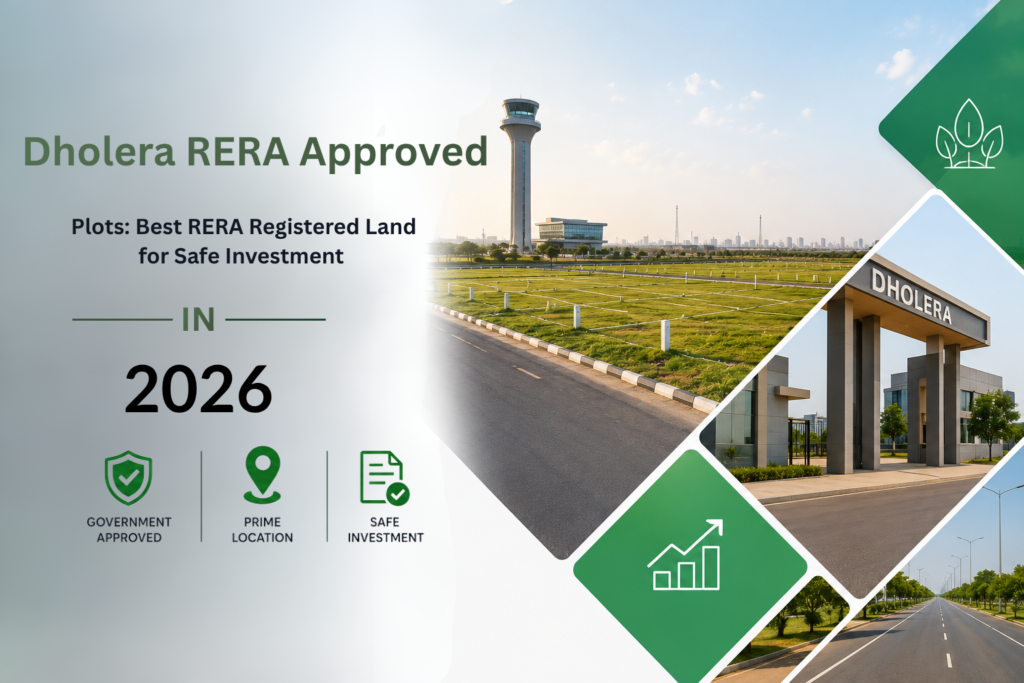
Buying land is exciting—but let’s be honest, it can also feel risky if the paperwork isn’t clean or the project promises sound “too perfect.” That’s exactly why RERA-approved plots are becoming the first preference for serious buyers looking at Dholera in 2026. At BHADANI REALTOR, we regularly speak with investors and commercial buyers who want one thing above all: clarity. They don’t want confusing claims, hidden charges, or documentation surprises later. They want a safe, verifiable purchase—especially when planning a longer-term Dholera plot investment that may be held for years. In this guide, we’ll keep it simple and practical: what “RERA approved” really means, why it matters in Dholera, how to verify a project, and how to choose the right plot based on your goals for 2026. 1) Why Dholera in 2026 Is on Every Investor’s Radar A planned region with long-term intent Dholera isn’t being marketed as “just another plotting area.” It is positioned as a planned development region under the Dholera SIR (Special Investment Region) vision. That’s a big reason why people researching Dholera plot investment are looking beyond short-term flips and focusing on long-term growth. Residential + commercial interest is rising together What’s interesting is that Dholera attracts two types of buyers at once: Families and end-users looking at residential plots in Dholera Investors and business-minded buyers tracking commercial movement and industrial plots Dholera price trends When residential demand and commercial interest grow in the same ecosystem, land markets generally mature faster—but only if the purchase is done safely and transparently. 2) What “RERA Approved Plots” Actually Means (In Simple Words) RERA isn’t a “bonus”—it’s a safety filter RERA (Real Estate Regulatory Authority) registration is meant to protect buyers. In a RERA-registered plotting project, key details are formally declared—such as approvals, layout, timeline (if applicable), and the promoter’s legal commitments. In real-world terms, RERA helps reduce the chances of: Misleading ads or fake urgency tactics Unclear project status “Changed layout later” surprises Documentation gaps that become headaches at resale A quick note based on what buyers often ask A common question we hear is: “If it’s RERA registered, does it mean there’s zero risk?”Truthfully, no system removes all risk. But RERA registration is a strong starting point because it makes the developer/project more accountable and gives you a clear reference point for verification. That’s why, if you’re planning a serious Dholera plot investment for 2026, RERA registration is one of the most practical filters you can apply early. 3) How to Choose the “Best” RERA Registered Residential Plot in Dholera Start with your purpose: end-use, resale, or long hold? Before you compare listings or prices, get clear on one thing: why are you buying? End-use (home later): prioritize livability, access roads, and long-term neighborhood potential. Resale (medium-term): focus on demand pockets and clean documentation that future buyers will trust. Long hold (investment): prioritize credibility, planned connectivity, and steady development signals. This clarity prevents a common mistake: buying a plot that is “cheap today” but difficult to resell because buyers don’t trust the paperwork or location. Location isn’t only about distance—it’s about “future usability” While exploring plots for sale in Dholera, don’t just ask “How far is it?” Ask: Is the internal road layout practical? Is the approach road clear and usable? Does the plot shape support future construction? Is the area likely to attract real end-users later? A plot can look great on paper, but if access and planning are weak, it may sit idle longer than you expect. 4) A Practical Verification Checklist (Do This Before You Pay Anything) When people search plot sale in Dholera, they often focus heavily on price per sq. yd. But in land buying, documentation quality is the real “profit protector.” Here’s a simple checklist you can follow: Buyer’s checklist for RERA-approved plots Check the RERA registration number and match project details on the official portal (project name, promoter name, location). Verify the layout plan you’re being shown matches the registered/approved plan. Ask for title clarity documents (and if needed, get a legal opinion). Confirm what you’re actually buying: plot number, dimensions, exact boundaries, and approach. Understand charges in writing: development charges, maintenance, registry costs, or any extras. Get timelines and deliverables clearly stated (roads, demarcation, basic infrastructure—whatever is promised). Avoid “cash-first” pressure and insist on proper receipts and written commitments. If a seller hesitates on basic verification, treat it as a warning sign—no matter how attractive the deal looks. 5) Residential vs Industrial: What Commercial Buyers Should Consider Residential plots: safer entry for many investors For a large number of buyers, residential plotting is the easier entry point because: Ticket sizes can be manageable Resale markets are broader (more potential buyers) Documentation is often more standardized in reputed plotting projects This is why many people begin their Dholera plot investment journey with residential land and expand later. Industrial angle: watch pricing, approvals, and suitability If you’re a commercial buyer tracking industrial plots Dholera price, take a slightly different approach: Confirm land-use suitability (industrial vs residential vs mixed) Understand compliance needs for your intended use Evaluate connectivity, logistics practicality, and zoning In short: industrial opportunities can be strong, but they require tighter due diligence. 6) What to Expect During Dholera SIR Plot Booking (A Buyer-Friendly Walkthrough) The booking process should feel clean—not confusing A professional Dholera SIR plot booking experience usually includes: Plot selection with a clear layout map Transparent pricing sheet and payment schedule Document checklist shared upfront Site visit support (ideally with proper demarcation guidance) If you’re being rushed without clarity, pause and re-check. A note from on-ground experience One thing I’ve noticed while guiding buyers: many people skip the “boring” part (paper verification) because they’re excited about the site visit. Later, they realize the paperwork matters more than the photo. A plot that is easy to verify today is usually easier to sell tomorrow. 7) Why BHADANI REALTOR for RERA Approved Plots in Dholera There are plenty of listings online for Dholera land for sale. The difference is how confidently you can verify what you’re buying. At BHADANI REALTOR, our focus is not just showing options—it’s helping you shortlist plots that make sense for your goal and
Where Can You Find the Best Plot Sale Deals in Dholera?

If you’ve been tracking Gujarat’s growth story, chances are Dholera has already shown up on your radar—especially if you’re an investor or a commercial buyer thinking 3–10 years ahead. The big question we hear almost daily is simple: Where do you actually find a good deal—one that looks attractive on price and stays safe on paperwork? Because here’s the honest truth: finding a low rate is easy. Finding a clean, verifiable deal that fits your goal (resale, long-hold, business use, warehousing, leasing) takes a bit more method and local clarity. In this guide, we’ll break down where the best opportunities usually come from, how serious buyers compare options, and what to check before you pay even a token amount. And yes—if your end goal is Dholera plot investment, we’ll also cover the practical side that most people skip. 1) Why Dholera Keeps Attracting Investors (and Serious Buyers) Dholera is often discussed as a long-term, planned-development market. For investors, that matters because planned regions tend to reward patience—if the entry is right and the purchase is clean. What’s driving buyer attention? A few reasons keep coming up in our conversations and site visits with clients looking for Dholera land for sale: Planned region narrative: Dholera SIR is positioned as a planned investment region, which attracts long-horizon capital. Infrastructure expectations: Projects like major road connectivity and proposed developments create future potential (timelines can vary, so buyers should stay realistic). Early-mover mindset: Many investors prefer to enter before pricing becomes “fully discovered.” A quick “on-ground” insight (from our experience) When we host site visits, most investors start with price… but they decide based on clarity. The deals that close confidently are usually the ones where the buyer can answer three things without confusion: Where exactly is the plot? What documents support it? What is the realistic time horizon? That mindset is what turns a random purchase into a purposeful Dholera plot investment. 2) Where You Can Find the Best Plot Deals in Dholera (5 Practical Sources) Let’s get specific. If you’re searching for plots for sale in Dholera, these are the channels that most often produce solid opportunities—along with the trade-offs to keep in mind. 1) Verified local consultants and channel partners This is still one of the most efficient ways to access live inventory—especially when you want options across multiple pockets and budgets. A good consultant will also tell you what not to buy. The difference between a random broker and a verified advisor is simple: documentation clarity and accountability. 2) Developer-authorized projects (with transparent paperwork) Many buyers prefer developer offerings because the process can feel more structured—especially for residential plots in Dholera or plotted developments designed for investment. What to watch: Ask for documentation details early (not after you pay). Confirm what exactly is promised: possession timeline, boundary demarcation, internal roads, etc. 3) Resale opportunities (good deals exist—but only when realistic) Resale can sometimes offer better negotiation, especially if the seller needs liquidity. But resale also requires sharper verification—because you’re relying on the seller’s document chain. If you’re hunting for plot sale in Dholera, resale can be worthwhile—just don’t treat it like an OLX-style transaction. Do it like a property deal. 4) Deals uncovered through site visits (the most underrated method) Online listings don’t show you approach roads, surrounding activity, or “what’s actually there.” A half-day site visit often saves months of confusion. During site visits, we recommend noting: Road access and ease of reaching the plot Nearby developments (real, not promised) Whether the plot is properly identifiable on-site 5) Referrals from existing buyers and plot holders Referrals often filter out low-quality leads. People usually recommend what they’ve personally verified. It’s not always cheaper, but it’s often safer. 3) How to Compare Deals Like an Investor (Not a Browsing Buyer) If you’re evaluating Dholera plot sale options, it’s easy to get stuck in rate-per-yard comparisons. Investors should go one step deeper. First, define the purpose (investment vs commercial use) Are you planning to: Hold for long-term appreciation? Resell in 2–5 years? Acquire for a business purpose (warehouse, office, small industrial use)? This changes what “best deal” means. Location logic beats “cheap rate” logic Two plots at the same price can behave very differently in the resale market. Location factors to compare: Practical connectivity and approach roads Nearby existing activity (not just future plans) Plot surroundings (open land vs active development) Payment plan, possession, and exit matter more than the headline price A deal that looks cheap can become expensive if: Possession is unclear Paperwork drags Resale demand is weak in that pocket For a stable Dholera plot investment, you want clean paperwork, clarity on timelines, and a realistic resale audience. Industrial and commercial buyers: ask different questions If you’re exploring industrial plots Dholera price comparisons, don’t stop at “rate.” Ask: Is the plot suitable for your intended use? What’s the road approach like for vehicles and logistics? What documentation is available to support future transfer/registration? (And yes—always verify usage rules and approvals with the right authorities/experts.) 4) The Non‑Negotiable Checks Before You Book Any Plot This section is where smart buyers separate themselves from impulsive buyers. Whether you plan to buy plot in Dholera for investment or future commercial use, do these checks before you pay even a small booking amount. Confirm ownership and title clarity Ask for: Current ownership proof Chain of documents (how the seller acquired it) Any encumbrance details (loans, disputes, legal notices if any) If the seller avoids questions or pushes you to “pay first, we’ll share later,” consider it a red flag. Verify plot identification and demarcation on-site On paper, everything looks neat. On the ground, some plots are hard to locate. During a visit, ensure: The plot can be physically identified Boundaries/markings are clear (or can be clearly established) Access is practical, not theoretical Ask what you’re actually buying (plot + what else?) Some offerings include internal roads, basic development, or layout planning; others are plain land parcels. Get it in writing. Don’t assume approvals—verify them One of the most common mistakes we see is buyers assuming that
Why Plot Sale Investment Is Growing Fast in Dholera?

Over the past few years, Dholera real estate investment has slowly started gaining attention. Earlier, it was mostly discussed among local investors. Now, even buyers from other states are exploring opportunities here. The reason is simple. Dholera is not growing randomly. It is being developed with planning, infrastructure support, and long-term industrial vision. Let’s understand this in a practical way. A Planned Smart City, Not Unplanned Expansion One of the biggest reasons behind the rise in Dholera SIR development is structured planning. Dholera is part of the Delhi-Mumbai Industrial Corridor and is being built as India’s first greenfield smart city. That means the city layout is being designed before it becomes overcrowded. You’ll find: Wide planned roads Clear residential and industrial zoning Underground utilities Organized drainage systems For investors looking at plots in Dholera SIR, this kind of planning reduces uncertainty. Cities that grow without structure often struggle later. Dholera is trying to avoid that from the beginning. Infrastructure Is Changing the Outlook Infrastructure often decides whether a location will grow or stay stagnant. In Dholera, several major projects are underway: Ahmedabad Dholera Expressway Dholera International Airport project Industrial corridor connectivity Smart city infrastructure planning Improved connectivity usually leads to economic movement. When travel becomes easier and logistics improve, businesses show interest. Over time, this impacts Dholera land price trends. Investors tracking Dholera smart city progress are closely watching how these projects move forward. Industrial Development Is Creating Real Demand Another important factor is industrial positioning. Dholera is not being promoted only as a residential zone. It is planned as a manufacturing and industrial hub. With announcements around semiconductor and manufacturing units, interest in industrial plots in Dholera has increased. When industries establish operations: Employment opportunities grow Residential housing demand increases Commercial activities expand This ecosystem creates organic demand rather than short-term speculation. That is why many investors searching for long term land investment in Gujarat are including Dholera in their research. Still Affordable Compared to Major Cities Compared to established cities like Ahmedabad or Mumbai, land prices here are still relatively accessible. For buyers researching affordable plots in Dholera or comparing Dholera plot price appreciation, the current stage offers early-entry opportunities. Of course, appreciation depends on execution and market conditions, but the entry cost remains lower than mature urban markets. This is one reason why searches for buy plot in Dholera SIR and Dholera plot booking have increased recently. Government Backing Adds Stability Government involvement provides a structured development framework. The project is phased and regulated, which adds a layer of transparency. For those exploring Gujarat smart city investment opportunities, regulatory clarity and zoning structure play a big role in decision-making. Clear planning reduces confusion related to land use and future infrastructure alignment. A Long-Term Perspective Is Important It is important to understand that Dholera land investment is generally viewed as a medium- to long-term opportunity. The region is still developing. Infrastructure is progressing in phases. Industrial occupancy will take time. Investors who enter here usually do so with patience and realistic expectations. As with any emerging market, careful research and documentation verification remain essential. Final Thoughts The rising interest in Dholera property investment appears to be driven by infrastructure growth, industrial planning, and early-stage pricing advantages. While future returns will depend on project execution and economic conditions, the foundational factors attracting attention are visible. Investors who prefer entering developing markets at an early phase may find Dholera worth studying in detail. For verified information and local assistance: +91 7602654981www.bhadanirealtor.com
How to Find the Best Plot Sale Deals in Dholera for Smart Investment?

Buying land is exciting—but it can also feel confusing if you don’t know what to check. Dholera has been on many investors’ radar for good reasons, and you’ll see plenty of ads for plots, offers, and limited-time discounts. The real question is: how do you find a good deal that is also safe and worth holding for the future? In this guide, I’ll walk you through practical, real-world steps to evaluate a deal, verify documents, compare locations, and avoid common traps—so your Dholera plot investment feels confident, not rushed. If you’re exploring plot sale in Dholera opportunities, this blog will help you shortlist smarter. 1) Why Dholera Is On Smart Investors’ Watchlist Dholera SIR: what it means for long-term value Dholera SIR (Special Investment Region) is one of the most talked-about planned development zones in Gujarat. When an area is planned with future infrastructure in mind, it often attracts attention from long-term buyers—especially those who prefer land over high-maintenance assets. What typically drives interest in Dholera land for sale: Planned roads and zoning concepts Long-term industrial and logistics potential Growing curiosity from investors looking early Infrastructure + connectivity changes the future story Any location’s land value is closely linked to connectivity and real development progress. Instead of trusting random claims, look at what’s actually improving over time—approach roads, visible development activity, and access to key routes. If you’re hearing people discuss plots in dholera sir, the smartest approach is to separate future promise from present proof. Future potential matters—but only when the deal is clean, and the location makes sense. 2) Know What You’re Buying: Plot Types, Zones, and Buyer Goals Residential vs industrial: pick based on your purpose Before you compare prices, get clear on why you’re buying. Are you holding for appreciation? Planning to build later? Looking for a plot that could suit commercial/industrial activity in the long run? A simple way to think about it: Residential plots in Dholera: Often preferred for long-term holding, future home plans, or safer entry budgets. Industrial plots: Usually discussed by higher-budget investors and business buyers; always check zoning and approvals carefully. If you keep seeing “industrial plots Dholera price” advertised, don’t compare it blindly with residential pricing. Industrial pricing can vary wildly depending on zone, access, and documentation. “Cheap plot” vs “good plot”: the difference is paperwork + location A low price alone is not a deal. A real deal is: Clear title and correct documentation A location that makes sense for future demand Fair pricing compared to nearby verified listings Many first-time buyers start with online searches like “plots for sale in Dholera” or “Dholera plot sale.” That’s fine—but treat online listings as a starting point, not final truth. 3) The Smart Deal Checklist: How to Verify a Plot Before Paying Do the legal checks (this is where most people skip) If you want to buy plot in Dholera safely, spend most of your energy on verification. A genuine seller won’t rush you or avoid questions. Key checks you should insist on (with proper professional help): Title clarity and ownership proof Past transaction history (to spot disputes) Proper land records and matching details (survey number, boundaries, etc.) Any encumbrances/loans/legal notices Agreement terms that match what was promised If a deal is being pushed as best plot sale in Dholera today but the seller avoids sharing documents—pause immediately. Confirm approvals and what “plotting” actually means Not every “plotted” land offering is equal. Some are well-structured with clear layouts, while others are simply land parcels marketed as plots. Ask directly: Is the plot part of an approved layout? Are internal roads/markings actually planned or just promised? What basic infrastructure exists today, and what’s only expected later? This is also where working with a trustworthy local property advisor makes a big difference, because they can help you separate genuine projects from risky ones. 4) How to Spot the Best Deals (Without Falling for Flashy Offers) Compare pricing the right way (not just “per square yard”) Pricing comparisons only make sense when you compare similar plots: Same or similar zone/location Similar road access Similar documentation quality Similar plot size and shape A corner plot, a main-road-facing plot, or a plot near an access road can be priced differently. So instead of chasing the lowest number, aim for the best value per future usability. A helpful tip: shortlist 5–7 options, then compare them side by side. That’s how serious buyers evaluate plots in dholera sir without getting emotionally attached to the first “discount” they see. Timing, negotiation, and payment structure Good deals often come from: Sellers who want quick, clean transactions Owners who prefer lump-sum payment Inventory that’s fairly priced but negotiable Negotiation basics that keep things respectful and practical: Ask for a price justification (recent deals nearby, road access, documents) Request a site visit before final price talk Negotiate on total value, not just token discounts Keep every promise in writing (even small ones) Remember: a “limited offer” isn’t a reason to skip due diligence. If the deal is real, it will still be real tomorrow after verification. 5) Red Flags to Avoid When Buying Land in Dholera Common warning signs (save this list) Be extra cautious if you notice: “Book now” pressure without document sharing Vague location descriptions (no clear map, no boundaries) Prices far below the market without a solid reason No proper paperwork trail or unclear ownership history Promises that sound too perfect (“instant double in 6 months”) Land can be a strong asset—but only when the foundation is correct: legal clarity + correct location + realistic expectations. Don’t rely only on photos and pins Photos can look great, and map pins can be misleading. Always verify: Exact site boundaries on ground Approach road condition Nearby development reality (not just planned) When people casually recommend plots in dholera sir on social media groups, take it as a lead—not proof. 6) A Simple Step-by-Step Plan to Find a Deal You Can Trust Step 1: shortlist based on goal + budget Decide if you’re looking for: Budget entry plot for holding Mid-range plot with better
Connect With Us