
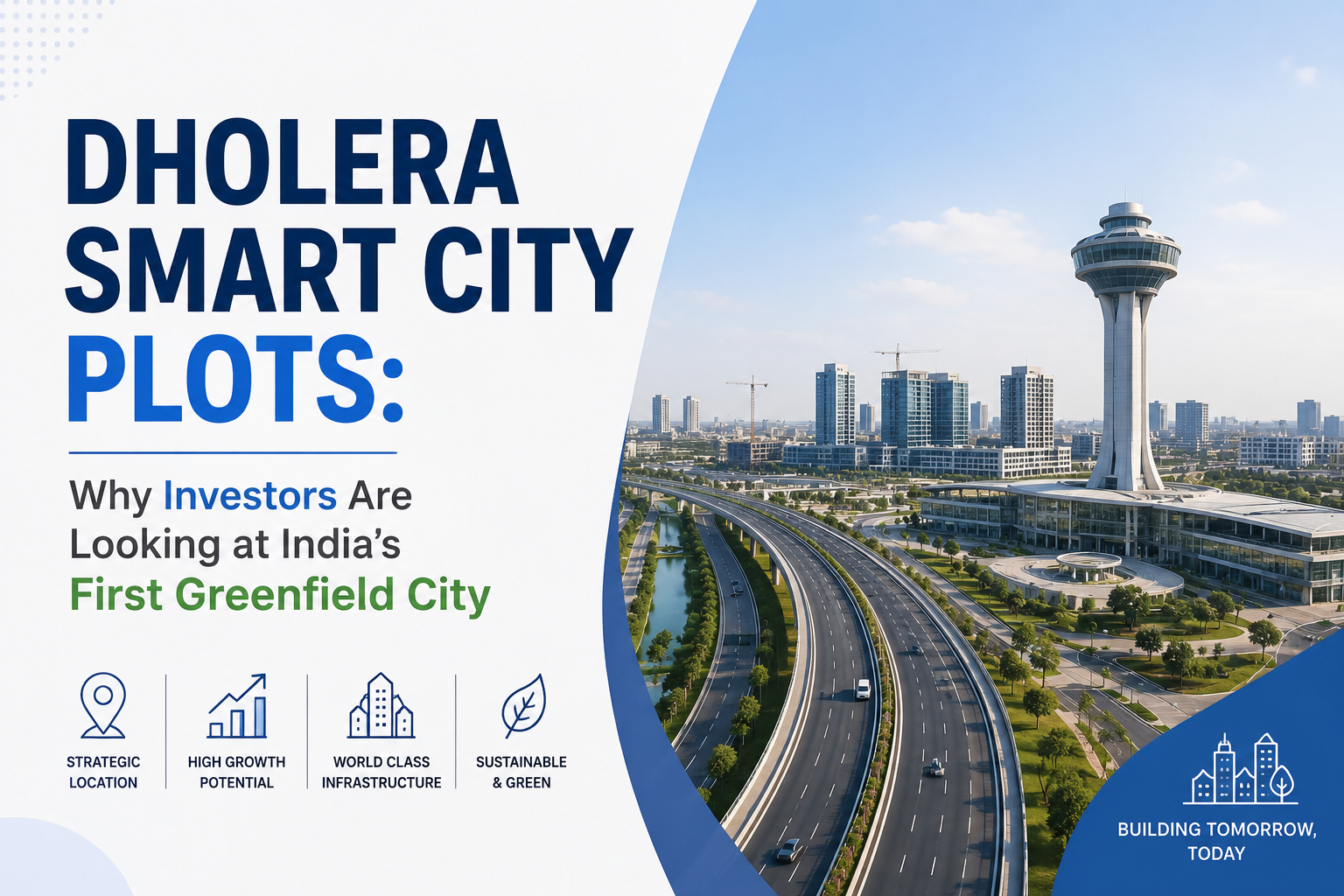
Why Plot Sale Investment Is Growing Fast in Dholera?

Over the past few years, Dholera real estate investment has slowly started gaining attention. Earlier, it was mostly discussed among local investors. Now, even buyers from other states are exploring opportunities here. The reason is simple. Dholera is not growing randomly. It is being developed with planning, infrastructure support, and long-term industrial vision. Let’s understand this in a practical way. A Planned Smart City, Not Unplanned Expansion One of the biggest reasons behind the rise in Dholera SIR development is structured planning. Dholera is part of the Delhi-Mumbai Industrial Corridor and is being built as India’s first greenfield smart city. That means the city layout is being designed before it becomes overcrowded. You’ll find: Wide planned roads Clear residential and industrial zoning Underground utilities Organized drainage systems For investors looking at plots in Dholera SIR, this kind of planning reduces uncertainty. Cities that grow without structure often struggle later. Dholera is trying to avoid that from the beginning. Infrastructure Is Changing the Outlook Infrastructure often decides whether a location will grow or stay stagnant. In Dholera, several major projects are underway: Ahmedabad Dholera Expressway Dholera International Airport project Industrial corridor connectivity Smart city infrastructure planning Improved connectivity usually leads to economic movement. When travel becomes easier and logistics improve, businesses show interest. Over time, this impacts Dholera land price trends. Investors tracking Dholera smart city progress are closely watching how these projects move forward. Industrial Development Is Creating Real Demand Another important factor is industrial positioning. Dholera is not being promoted only as a residential zone. It is planned as a manufacturing and industrial hub. With announcements around semiconductor and manufacturing units, interest in industrial plots in Dholera has increased. When industries establish operations: Employment opportunities grow Residential housing demand increases Commercial activities expand This ecosystem creates organic demand rather than short-term speculation. That is why many investors searching for long term land investment in Gujarat are including Dholera in their research. Still Affordable Compared to Major Cities Compared to established cities like Ahmedabad or Mumbai, land prices here are still relatively accessible. For buyers researching affordable plots in Dholera or comparing Dholera plot price appreciation, the current stage offers early-entry opportunities. Of course, appreciation depends on execution and market conditions, but the entry cost remains lower than mature urban markets. This is one reason why searches for buy plot in Dholera SIR and Dholera plot booking have increased recently. Government Backing Adds Stability Government involvement provides a structured development framework. The project is phased and regulated, which adds a layer of transparency. For those exploring Gujarat smart city investment opportunities, regulatory clarity and zoning structure play a big role in decision-making. Clear planning reduces confusion related to land use and future infrastructure alignment. A Long-Term Perspective Is Important It is important to understand that Dholera land investment is generally viewed as a medium- to long-term opportunity. The region is still developing. Infrastructure is progressing in phases. Industrial occupancy will take time. Investors who enter here usually do so with patience and realistic expectations. As with any emerging market, careful research and documentation verification remain essential. Final Thoughts The rising interest in Dholera property investment appears to be driven by infrastructure growth, industrial planning, and early-stage pricing advantages. While future returns will depend on project execution and economic conditions, the foundational factors attracting attention are visible. Investors who prefer entering developing markets at an early phase may find Dholera worth studying in detail. For verified information and local assistance: +91 7602654981www.bhadanirealtor.com
What Tokyo Electron’s Growing Footprint Could Mean for Dholera’s Next Real Estate Wave

Big industrial moves have a way of changing how people look at a location—sometimes quietly, sometimes overnight. Over the last few months, there’s been more attention on global semiconductor and electronics supply chains, and that has naturally pulled investor eyes toward emerging industrial hubs in India. One topic that keeps coming up in property discussions is Tokyo Electron Expanding its presence in and around Gujarat’s upcoming industrial corridors. Even when details are still unfolding, the direction of travel matters: large technology ecosystems don’t grow in isolation. They bring vendors, logistics, housing demand, and new confidence into a region. In this blog, BHADANI REALTOR breaks down what this kind of development typically signals, why Dholera has become part of the conversation, and how buyers and investors can think clearly (and safely) about the opportunity—without hype. 1) Why “big company movement” matters in real estate How industrial signals shape long-term demand Real estate doesn’t move only because of shiny brochures. It moves because people and businesses actually need space—to live, to store, to manufacture, and to operate. When a large global name is linked to an area, even at the level of expansion planning or ecosystem scouting, it tends to create a ripple effect: More vendor and contractor activity More movement of skilled and semi-skilled workers Stronger interest from service businesses (warehousing, food, retail, rentals) Better visibility for the region on the national investment map The “ecosystem effect” most people miss The real shift often comes from the support network that forms around major manufacturers—ancillary units, supply partners, and service providers. That’s where land demand becomes more layered: not just “plots,” but plots in the right zones, with the right access, and the right timelines. 2) Why Dholera keeps coming up in serious investor conversations Location, planning, and the long-game mindset Dholera Smart City is discussed so often because it represents something many investors look for but rarely find: a planned development narrative tied to industrial infrastructure. People aren’t only betting on today’s demand—they’re positioning for what demand could look like as projects mature. Dholera’s appeal usually comes down to a few practical points: Long-term industrial planning and designated development zones Connectivity improvements (existing and proposed) that can shorten travel and logistics time The “planned city” angle, which often attracts buyers who prefer structured growth over unplanned sprawl It’s not just “a place”—it’s a timeline The most important word here is patience. Planned regions can offer strong upside, but they don’t always move at the pace of a fully mature city. Smart investors treat Dholera like a timeline-based investment: enter carefully, verify everything, and hold with realistic expectations. 3) What a tech/semiconductor-linked expansion typically changes on the ground Jobs, rentals, and day-to-day demand If industrial activity strengthens in a region, the first real estate impact is often visible in: Rental demand (workers, managers, project teams) Small retail and daily-needs businesses Short-stay and mid-stay accommodation needs Transport, logistics, and warehousing requirements Even before large factories operate at full scale, the pre-development and ecosystem setup can create demand pockets—especially near key access routes and commercial clusters. Investor sentiment becomes more “serious” The second shift is psychological but powerful: credible industrial interest tends to pull in more disciplined buyers. And when that happens, people start asking better questions: “What is the zone and land title status?” “What approvals are in place?” “How far is this from key infrastructure?” “What is the realistic holding period?” That’s healthy. It reduces random speculation and improves the quality of market activity overall. 4) What this could mean for plots, homes, and commercial spaces For residential buyers: focus on livability, not just price Residential demand grows when employment and services grow. For homebuyers (especially end-users), the right question isn’t only “Will prices rise?” It’s also: Will daily needs be accessible over time? Is the area likely to develop stable neighborhoods? Can this property serve as a rental asset if plans change? A thoughtful residential buy can balance future upside with practical usability. For plot investors: choose clarity over excitement Plots are often the first choice for long-term investors in planned regions, but they also come with responsibility. The key is to invest where documentation and zoning clarity is strong, and where your holding period matches the ground reality. This is also where discussions about Tokyo Electron Expanding its footprint become relevant—not as a guarantee, but as a signal that the broader industrial ecosystem may strengthen over time, which can support land demand in the right pockets. For commercial/industrial interest: location and access win Commercial success depends less on “city hype” and more on: Road connectivity and transport efficiency Proximity to industrial activity and worker movement Compliance readiness and suitability for intended use If you’re considering commercial property in a developing zone, small differences in location can make a big difference later. 5) Practical checks before you invest (the part most people skip) Verify documentation and approvals—don’t assume No matter how positive the story sounds, the basics protect your money: Verify land title and ownership chain Confirm zoning and usage permissions Check whether the plot falls in a clearly identifiable, legally compliant development area Ask for transparent paperwork—no shortcuts Know your horizon: 2 years vs. 7 years are different investments Planned regions can reward long-term holders, but short-term expectations can lead to disappointment. Decide your horizon upfront: If you need liquidity quickly, choose safer, more mature options If you can hold longer, you can explore growth corridors—but still with due diligence Have a clean exit plan Before you buy, ask: Who is the likely buyer after me? What kind of development will make this location more valuable? What documentation will make resale easier? The best investments are the ones you can explain simply to the next buyer. 6) Why BHADANI REALTOR is the right local partner for Dholera-focused buyers On-ground clarity beats online assumptions Online information can be helpful, but property decisions need local verification. BHADANI REALTOR focuses on helping buyers make decisions based on: real site understanding paperwork clarity suitability to your budget and timeline straightforward guidance without pressure A
Connect With Us